Two additional attempts for UPSC's civil services exams

Two additional attempts for UPSC's civil services exams
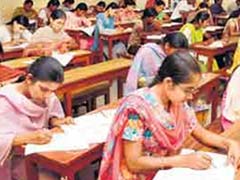
New Delhi:  Those aspiring for the civil services can now make two additional attempts at clearing the prestigious exam and can try till they are 32.

In good news for lakhs of aspirants, the government has decided to allow more attempts for the exam conducted by Union Public Service Commission, from this year. This comes after an assurance by Congress vice president Rahul Gandhi to a delegation of civil service aspirants; many of them had protested outside his home.


Currently, a candidate is allowed a maximum of four attempts, till they are 30. There is no such limit on candidates belonging to Scheduled Caste and Scheduled Tribe categories. Candidates belonging to Other Backward Classes get seven attempts.

The government's decision will impact candidates who have exhausted six attempts before 30 years of age. This year's exams are scheduled to be held in August.

The Civil Service Examinations is conducted for the selection of officers for the Indian Administrative Service (IAS), Indian Police Service (IPS) and Indian Foreign Service (IFS) among others.

The examinations are conducted in three stages-- preliminary, mains and interview.

The upper age limit is relaxable up to a maximum of five years for candidates belonging to SCs or STs categories and up to a maximum of three years for candidates of OBC category among others.

The upper age limit is also relaxable upto a maximum of five years if a candidate had ordinarily been domiciled in Jammu & Kashmir during January 1, 1980 to December 31, 1989. It can also be relaxed for the disabled.

Comments

Popular posts from this blog

SC asks Centre to strike a balance on Rohingya issue (.hindu)

Supreme Court orally indicates that the government should not deport Rohingya “now” as the Centre prevails over it to not record any such views in its formal order, citing “international ramifications”. The Supreme Court on Friday came close to ordering the government not to deport the Rohingya. It finally settled on merely observing that a balance should be struck between humanitarian concern for the community and the country's national security and economic interests. The court was hearing a bunch of petitions, one filed by persons within the Rohingya community, against a proposed move to deport over 40,000 Rohingya refugees. A three-judge Bench, led by Chief Justice of India Dipak Misra, began by orally indicating that the government should not deport Rohingya “now”, but the government prevailed on the court to not pass any formal order, citing “international ramifications”. With this, the status quo continues even though the court gave the community liberty to approach i...

What's ailing Namami Gange programme?(DTE)

Winters are extremely hectic for Sushma Patel, a vegetable grower in Uttar Pradesh’s Chunar town. Her farm is in the fertile plains of Ganga where people grow three crops a year. But this is the only season when she can grow vegetables. And before that, she needs to manually dig out shreds of plastic and wrappers from her one-hectare (ha) farm. “This is all because of the nullah,” she says, pointing at an open drain that runs through her field, carrying sewage from the neighbourhood to the Ganga. “Every monsoon, the drain overflows and inundates the field with a thick, black sludge and plastic debris. We cannot even go near the field as the stench of sewage fills the air,” she says. But Patel has no one to complain to as this is the way of life for most people in this ancient town. About 70 per cent of the people in Chunar depend on toilets that have on-site sanitation, such as septic tanks and pits. In the absence of a proper disposal or management system, people simply dump the faec...

"ISRO has capabilities to build geostationary satellites for air quality monitoring” (downtoearth)

Pawan Gupta's findings on trans-boundary movement of pollution (Punjab to Delhi) from biomass burning in 2015 spurred debates. He participated in discussions with Indian regulators early September at the Better Air Quality Conference in Busan on the advantages of using satellite data for air quality monitoring. He explains to Down to Earth how air quality monitoring is done using satellite data. How is satellite data used to measure air pollution? Satellites that provide information on atmospheric pollutants are normally (not always) in the low earth orbits (400-1000 km above the Earth’s surface). A single satellite can carry one or more remote sensing instruments onboard that look down to earth and obtain information about the object in the field of view of satellite sensor. The Earth receives electromagnetic radiation from the sun, which travels through space and reaches the earth-atmosphere system. The radiation then interacts with the Earth’s atmosphere and the surface...